Why a Leftover Stump Costs You More
A stump left in the ground rarely stays a harmless piece of timber. It can regrow, rot, and attract termites and other pests that spread to nearby structures and plants.
It also becomes a trip hazard and a mower obstacle, and it blocks any plans for paths, lawns or garden beds.
Grinding: The Practical Choice for Most Yards
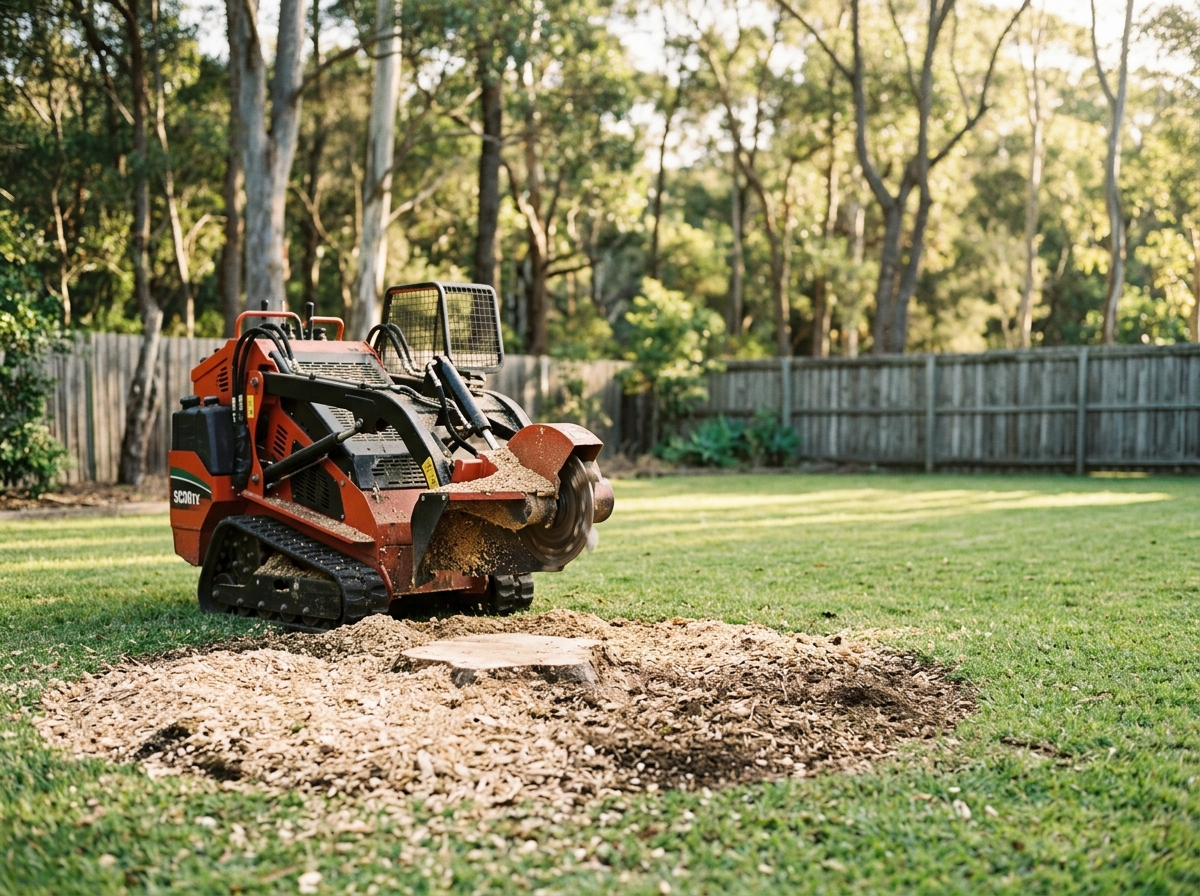
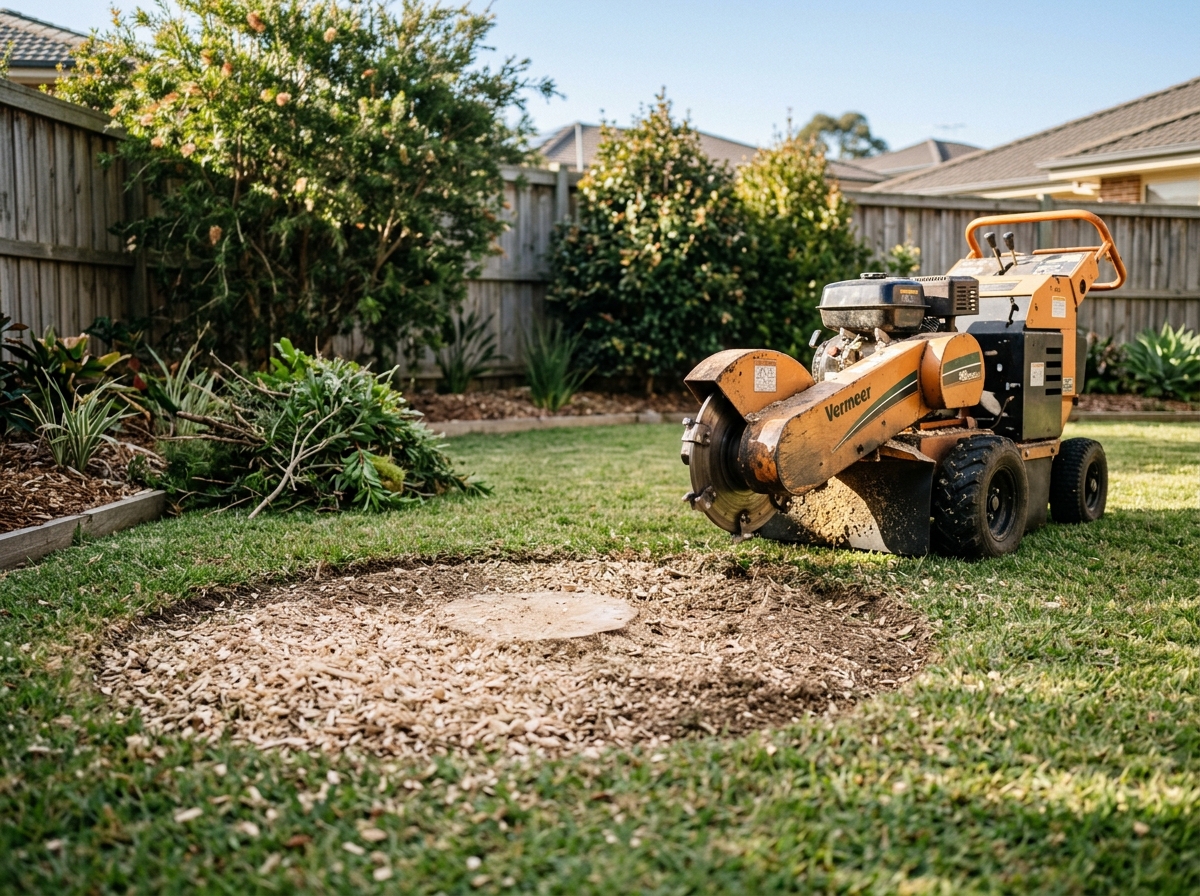
Stump grinding takes the stump down to ground level. It is faster and less invasive, because the roots stay in the soil and the surrounding ground and nearby plants are left largely undisturbed. For most Glenorie yards, that makes it the straightforward option when the aim is a clear, usable space.
Most people are surprised how much easier it is to deal with a stump straight after the tree comes down than years later, once the roots have spread and the timber has set hard.
Joseph Khoury, Director & Founder, Trees Down Under
When Full Stump Extraction Makes Sense
Stump extraction takes out the whole stump and often the main roots. It suits jobs where nothing can sit in the way of what comes next:
- Building a slab, shed or retaining wall over the spot
- Laying pools, pipes or deep footings
- Replanting a large tree in the same position
Check council permit requirements before removing any tree, as rules can apply to the tree as well as the stump.