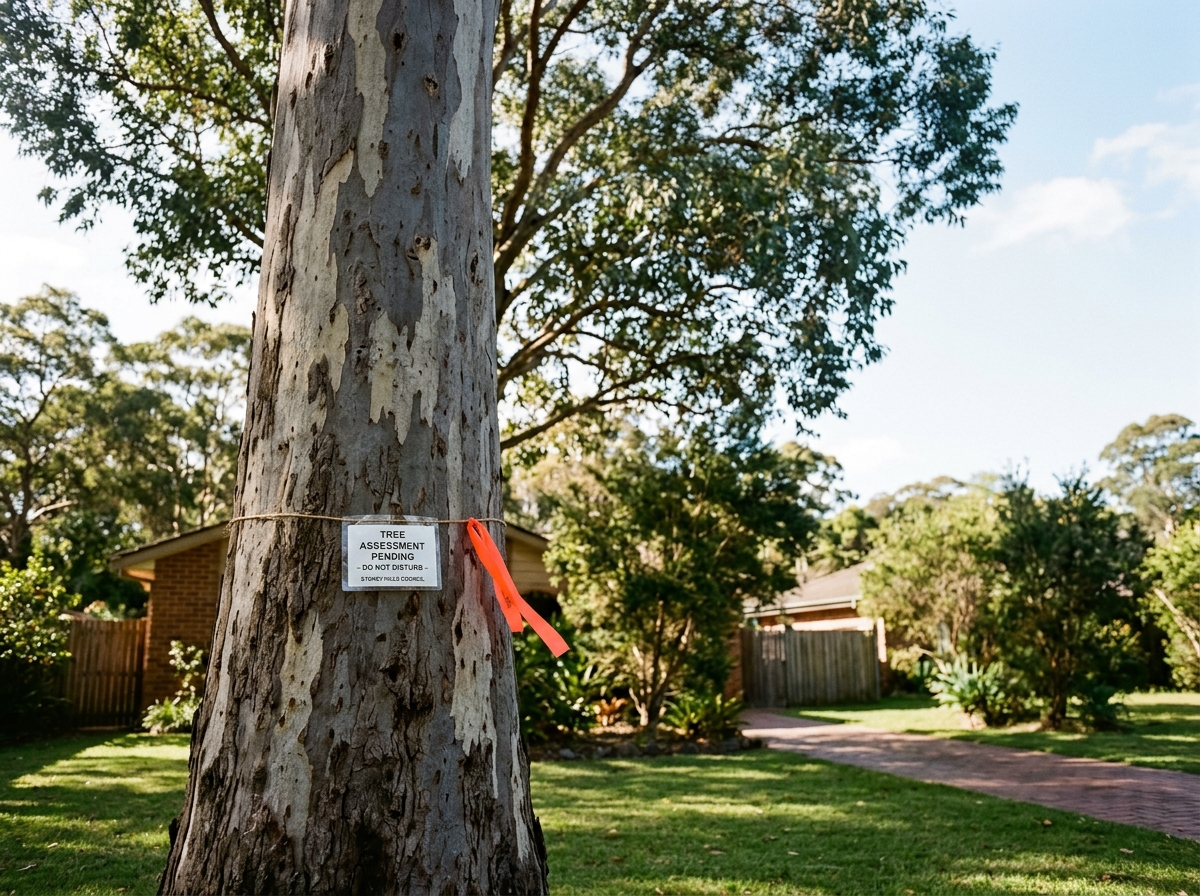
Mature spotted gum in a suburban front yard with an orange ribbon and small notice tag tied around its trunk.

The Hills Shire Council Tree Removal Permit: What Homeowners Need to Know

Protected trees in The Hills generally need council approval before any work. This page covers when a permit applies, how to apply and the risks of skipping it. Our Dural team offers a free tree inspection and same-day quoting.

Do You Need a Permit to Remove a Tree in The Hills Shire?

The short answer

In most cases, yes. Protected trees on private land typically need approval from The Hills Shire Council before they are removed, pruned or damaged. Private land tree removal consent is the rule rather than the exception, and doing the work first and asking later is the costly way round.

Why the rules are strict

The Hills District has comprehensive tree preservation orders covering native species, heritage trees and vegetation of high environmental significance. Council monitors tree work and follows up resident complaints. The tree preservation order Hills Shire owners need to check applies to both private and public land.

In dense suburbs such as Castle Hill and Norwest, neighbours often notice unapproved work and report it. Check the rules first and plan any tree removal with council in mind.

When a permit may not apply

A tree sitting wholly on your property is not free to remove just because you own the land. Approval can depend on height, trunk diameter, species and zoning overlays. Some trees fall outside the rules, but that depends on the tree and the site.

Thresholds also differ between councils, so figures from Hornsby or other areas should not be assumed. Confirm your tree’s status with The Hills Shire Council before any work begins.

How Tree Protection Works in NSW and The Hills

Where the rules come from

Tree protection in NSW works in layers. Local Environmental Plans (LEPs) and Tree Preservation Orders (TPOs) set what each council protects, and a permit from the local council is needed before a protected tree is cut down.

The State Environmental Planning Policy (Biodiversity and Conservation) sits above these local rules and covers native vegetation across a wider area.

How the layers fit together

The Hills Shire Council applies its own preservation rules to significant vegetation on both private and public land. Each Sydney council sets its own species protections, zoning rules, permit fees and processing times, so a rule from Hornsby or the City of Sydney should not be assumed to apply on a Hills District property.

Checking the council’s current tree management guidelines before any work is the safest starting point. Property owners can review the rules on the Hills Shire Council website, and the state framework is explained on the NSW Planning portal.

How a tree is judged for significance

Councils assess a tree against several grounds:

  • Historical value
  • Aboriginal cultural value
  • Botanical value
  • Landscape amenity
  • Functional role, such as shade, habitat or erosion control

A tree that scores well on any of these is protected, so approval is needed before removal or pruning.

A mature eucalyptus with a thick trunk and silvery-green canopy on a suburban lawn, brick house and street trees behind.

When Approval Is Usually Required

Common Triggers for Council Approval

Approval is usually required when a tree is tall or wide enough to meet council thresholds, is a native species in a mapped vegetation zone, or sits on a property with heritage, biodiversity or bushfire overlays. Hornsby Shire, for example, uses its own height and trunk limits, so Hills Shire figures should be confirmed with council rather than assumed.

Why Councils Ask for an Arborist Report

When a tree’s status is unclear, council often asks for an arborist report. This is the part owners most often struggle with alone, because the report has to show the tree’s condition and significance in terms council can assess.

What the Report Covers

Trees Down Under’s AQF Level 3-5 certified arborists inspect the tree and record:

  • Species, height, trunk diameter and canopy spread
  • Health, structural defects and risk to people or property
  • Ecological, landscape or heritage significance
  • Whether removal, or pruning instead, is justified

The report is written to support your Hills Shire Council tree removal permit application, with photos and clear reasoning attached.

Exempt Trees and Emergency Situations

Where exemptions typically apply

Some trees can be dealt with without a full permit, but only in narrow situations. Sydney-wide guidance lists dead or dangerous trees posing an immediate risk, emergency storm damage, and trees interfering with essential infrastructure such as power lines or drainage.

These are general categories, not a licence to cut. Each council sets its own list of exempt trees, so what is exempt elsewhere may not be exempt under Hills Shire Council.

Why exemption does not follow from a tree’s appearance

A tree that looks dead or unsafe may still be protected, and an owner who removes it on a hunch can face penalties and mandatory replanting. Councils often ask for evidence that the risk was real, such as photos or an assessment from a qualified arborist. A documented reason matters.

What to do before the saw comes out

Confirm the tree’s status with council first. Where a tree poses a real danger after a storm, Trees Down Under offers a 24/7 emergency tree service across Sydney to make the site safe and record the condition of the tree. For anything non-urgent, check the exemption in writing before any tree removal begins.

Eucalyptus with bare dead upper crown and a split limb over a paling fence, green leaves lower down, near a power line.

Pruning Rules and the 10 Percent Question

Pruning Can Need Consent Too

Tree pruning consent requirements apply to protected trees on private land, not just removal. Under The Hills Shire Council’s tree preservation controls, approval may be required before you prune or damage a protected tree. Our AQF Level 3-5 certified arborists check this first, so council rules are confirmed before any cut is made.

Where the 10 Percent Figure Comes From

The tree lopping 10 percent rule, a limit on how much canopy can be removed, is City of Sydney guidance. It should not be treated as a Hills Shire rule.

Thresholds differ between councils, which is why numbers from another area cannot be assumed to apply in the Hills District.

Check Before You Prune

Confirm your tree’s status with The Hills Shire Council before any pruning, including light trimming. Our team can inspect the tree, advise on what is likely to need consent and prepare the supporting arborist report if it does.

How to Apply for a Tree Removal Permit

A Hills Shire Council tree removal permit application follows a clear sequence, and a local team can handle most of it for you. The steps below show what the process involves.

The Application Steps

  1. Check whether the tree is protected, based on its species, size and any overlays on your property.
  2. Gather clear photos of the tree and its surroundings, plus an arborist report where council asks for one.
  3. Lodge the tree permit application with council.
  4. Pay the tree removal permit application fee.
  5. Wait for council’s decision before any work starts.

Fees and processing times are set by council, so check the current figures with them before you lodge. Do not assume they match another Sydney council.

Why Hills District Owners Trust the Process to Us

Trees Down Under is born and bred in the Hills District and based in Dural, so the council’s expectations are familiar ground. Property owners rate that local knowledge, with a 4.8/5 average from 182+ verified Google reviews.

Same-day quoting and prompt communication keep you informed from the first free tree inspection. Pricing is honest, with no hidden fees, so the paperwork stage holds no surprises.

We work with every local council in Sydney. Permits don’t have to be a headache when the right paperwork goes in the first time.

Joseph Khoury, Director & Founder, Trees Down Under

Before Any Cutting Starts

Work on a protected tree should only begin once council consent is in hand. You can read council’s own requirements on the Hills Shire Council website.

Penalties for Removing a Tree Without Consent

What Unapproved Removal Can Cost

Removing a protected tree without consent in The Hills Shire often leads to penalties above $10,000, plus a requirement to replant equivalent vegetation at the owner’s expense. Council monitors tree work and investigates complaints.

Wider NSW Maximums

The tree removal fine and penalty in NSW can be far higher at state level. General NSW penalties for unauthorised tree removal can reach $500,000 for individuals and $2 million for companies. Actual outcomes depend on the tree, the circumstances and the council’s enforcement decision.

Why Reports Are Common

In denser suburbs such as Castle Hill and Norwest, neighbours can spot tree work at a glance, so unapproved removal is more likely to be reported. Confirming the permit position first, and checking the Hills Shire Council website, protects both the property owner and the tree before removal begins.

Trees on the Boundary: Neighbour Disputes

When a neighbour’s tree is the problem, talk to them first and check council rules before anyone picks up a saw. The Trees (Disputes Between Neighbours) Act 2006 sets out what the Land and Environment Court can order, but it is a last resort after a conversation and a written request.

Council protection still applies to the tree itself. Pruning or removing a protected tree on a boundary without consent can lead to penalties for whoever commissioned the work. Check the Hills Shire Council tree controls and the Act before acting.

An arborist report can show whether a tree is diseased, unstable or damaging a structure, which strengthens a request to a neighbour or an application to council.

Not Sure If Your Tree Is Protected?

The Trees Down Under team in Dural can check it for you. Book a free tree inspection with no call-out fee and get a same-day quote. Call 0475 463 597 or send an enquiry through the form.