
You May Also Like:
- What Do Tree Pruning Services Actually Include?
- Can Tree Trimming Extend the Life of a Tree?
- How Can You Tell if Your Trees Need Pruning Before Sydney’s Summer Storms?
Choosing between tree trimming and tree removal is mostly a risk decision: can the tree be made safer while keeping its shade and character, or is failure becoming likely? For many ageing trees, the best first step is a professional inspection followed by targeted tree trimming that reduces hazards without sacrificing the canopy.
What Signs Show an Old Tree May Benefit from Tree Trimming?
An old tree often benefits from tree trimming when problems are visible but still manageable. The aim is to reduce risk, improve clearance, and keep the tree’s structure working with its age, not against it.
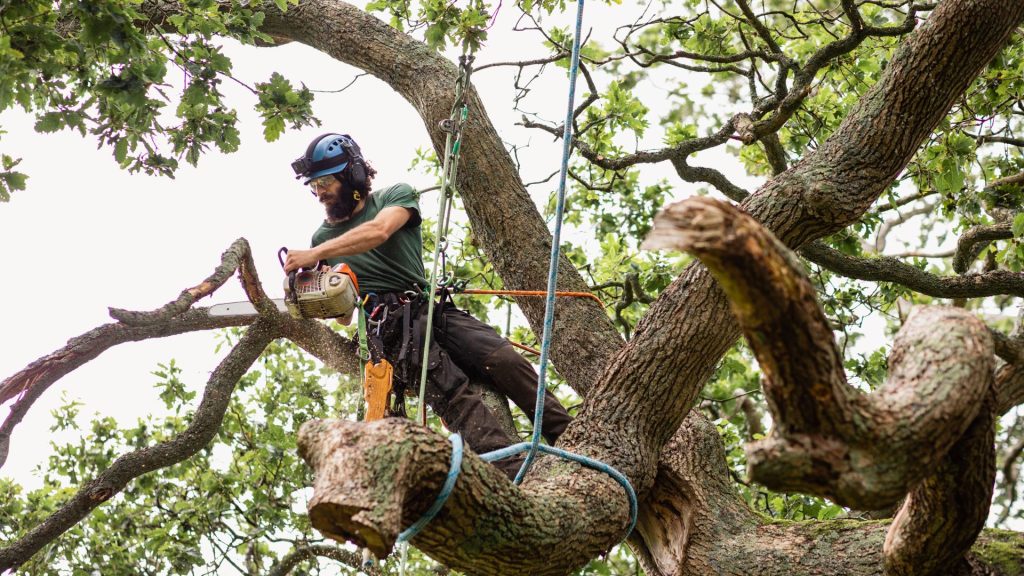
Common signs that tree trimming or tree pruning services may help include deadwood in the canopy, rubbing branches, crowded interior growth, low hanging limbs over driveways or paths, and minor storm damage. In these situations, tree trimming can remove hazards and reduce strain on heavy limbs while preserving the tree’s form.
What problems can be fixed with pruning instead of removing?
Many issues can be solved with pruning rather than removing the whole tree, especially when the trunk and roots remain sound. Tree pruning improves structure and health, while tree trimming focuses on safety, clearance, and shape, and most quotes include both.
Examples where tree trimming supports preservation include:
- reducing end weight on long limbs to lower leverage in wind
- removing crossing or rubbing branches to prevent wounds
- improving airflow and light through selective thinning
- correcting an uneven canopy after storms
- lifting the canopy for safe clearance over paths and driveways
When Is Tree Removal the Safer Option for an Ageing Tree?
Some old trees become high-risk, and tree removal is the safer option when the likelihood of failure is no longer acceptable, even after trimming. If the defects are structural or the roots are compromised, reducing the canopy may not remove the danger.
Red flag signs include a significant lean after storms, large trunk cracks or splits, major root heave, extensive decay or cavities, repeated limb drops, dead, drying, or infected trees, and uprooted or severely damaged trees. In these cases, delaying action can increase the chance of property damage or injury.
Tree removal usually means complete removal from top to roots, often followed by stump removal or stump grinding and green waste removal. A good provider will also carry out post removal inspections and share recommendations for replacement planting or site safety.
Tree removal is also common when access is required for construction, land clearing, development, or when an unavoidable hazard sits close to homes or roads. In Sydney, tree prevention laws may require permits or approval from the local council for tree lopping services or removals, so they should confirm regulations before work begins.
How Can an Arborist Assess the Health of an Old Tree?
An arborist assesses the health to estimate the likelihood of failure and the consequences if it fails, then decides between tree trimming and removal. The assessment also considers targets such as homes, cars, neighbours, and pedestrian areas.
Typical checks include canopy density and dieback pattern, trunk soundness, cavity size and location, bark condition, fungal indicators, root flare inspection, soil conditions, and evidence of past storm damage. They may also look for pests, disease, and poor previous cuts that make future breakage more likely.
From there, they plan the safest cutting or removal approach, including rigging methods, exclusion zones, and scheduling to reduce disruption. In Sydney, they may also help prepare documentation and evidence for permits and approvals where council rules apply.
Why Is Careful Tree Trimming Important for Mature Trees?
Mature trees need precision tree pruning services because incorrect cuts can accelerate decay, trigger weak regrowth, or destabilise heavy limbs, making the situation worse. Done properly, tree trimming reduces hazards while respecting how older wood responds to wounding.
Best practice focuses on selective cuts, avoiding topping, preserving the branch collar, balancing the canopy, and maintaining clearance without over-thinning. This is where routine maintenance differs from aggressive reduction, and tree lopping should be used only when justified and compliant with council rules.
Careful tree trimming supports long-term health, can boost property value, saves time and effort compared with repeated emergency call-outs, and meets environmental responsibility. It can also reduce legal exposure by addressing foreseeable hazards before they cause damage.
Can an Old Tree Be Preserved Safely Instead of Removed?
Many old trees can be preserved when the structure is sound and risk can be reduced to an acceptable level through tree trimming and follow-up care. Removal is usually the right call when decay, cracking, or root failure makes the risk unacceptable.
Preservation options often include staged tree trimming over multiple visits, crown reduction where appropriate, cabling and bracing if suitable, soil improvement and mulching, and pest and disease management. A professional company may also provide inspections, recommendations, tree care tips, and a maintenance plan after the first visit.
For locals in the Hills District and North Shore, Trees Down Under is one example of a provider that combines tree care with development services such as stump grinding, vegetation clearing, mulching, site preparation and grading, with environmental assessments and regulatory compliance in mind. If an old tree is raising concerns, they should book an arborist assessment and act on the findings before the next storm makes the decision for them.


