
You also may like:
- Tree Pruning for Bushfire Prevention: Reduce Fire Hazards with Proper Maintenance
- Tree Removal in the Blue Mountains for Storm-Damaged Trees
- Why Professional Tree Removal Keeps You Safe
What Fire Risks Do Overgrown or Dead Trees Pose in the Blue Mountains?
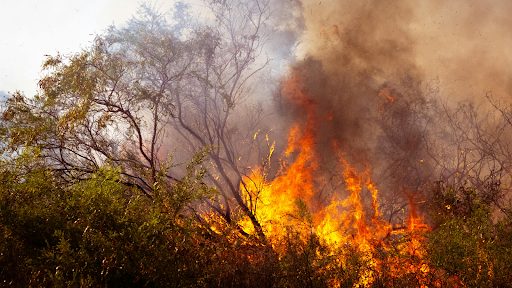
Overgrown and dead trees significantly increase wildfire fuel, creating a dangerous situation in which ground fires can easily reach the tops of trees. Thick undergrowth of Douglas-fir and grand fir trees can make fires burn hotter and spread faster, making them extremely difficult to control.
Insect infestations and drought-stressed trees make these risks even worse by creating large areas of dead wood that catch fire quickly. Professional tree removal services in the Blue Mountains can remove these hazards before they become primary wildfire fuel. Our comprehensive stump grinding services in Sun Valley and green waste removal services in Sun Valley ensure that there is no flammable material left on your property, addressing both visible trees and hidden fire risks underground.
Which Trees Are Most Important to Remove Before Fire Season Starts?
Before fire season begins, it’s crucial to for tree removal of certain types of trees that can pose a significant risk. These include:
- Dead trees
- Dying trees
- Infected trees
- Uprooted trees
- Damaged trees
These trees should be removed immediately because they contain dry, highly flammable material. Regardless of species, these compromised trees pose the greatest threat, mainly when located within 10 meters of buildings.
Tree Removal Regulations in the Blue Mountains
If you live in the Blue Mountains, it’s essential to know that local councils require permits for tree removal and pruning services in specific areas. However, there are certain exemptions under NSW’s 10/50 vegetation clearing rule for properties in designated bushfire-prone areas.
Here are some key points to understand about tree removal regulations in the Blue Mountains:
- Permits are required for tree removal and pruning services in Valley Heights and Faulconbridge.
- Specific exemptions apply under NSW’s 10/50 vegetation clearing rule for properties in designated bushfire-prone areas.
- Property owners must differentiate between complete tree removal and tree pruning.
Understanding Tree Removal vs Tree Pruning
Property owners need to understand the difference between complete tree removal and tree pruning:
- Complete tree removal: This involves extracting the entire tree from top to roots.
- Tree pruning: This technique reduces a tree’s size while preserving its structure.
Assessing High-Risk Native Species
Particular native species, such as specific eucalypts with loose bark and dense foliage, may require professional assessment. These characteristics can contribute to rapid fire spread when these trees are located near homes or along property boundaries.
How Does Tree Removal Create Safer Defensible Space Around Your Home?
Defensible space refers to the buffer zone between your home and surrounding vegetation that slows or stops wildfire spread. This critical area, typically extending 10-50 metres from structures, requires strategic vegetation management and tree removal to protect properties during fire season.
Complete tree removal in Warrimoo eliminates combustible material from ground level to canopy. Dead trees, overhanging branches, and dense undergrowth act as fuel ladders, allowing ground fires to reach treetops and spread rapidly. Removing entire trees—roots included—prevents regrowth and reduces fire intensity near homes.
Stump grinding in Warrimoo complements tree removal by eliminating below-ground fuel sources. Stumps and root systems decompose slowly, creating hidden fire hazards that can smoulder for days. Professional grinding removes these risks whilst preparing sites for landscaping or fire-resistant ground covers.
Green waste removal in Valley Heights and green waste removal Warrimoo ensure cut vegetation doesn’t become a new fire hazard. Leaving branches, leaves, and wood chips on-site defeats the purpose of tree removal. Professional disposal maintains clear defensible zones and helps residents meet NSW Rural Fire Service requirements for asset protection zones around dwellings.
When Should Blue Mountains Residents Schedule Tree Removal for Fire Preparation?
Book tree removal services between March and September, well ahead of the October bushfire season. Early spring assessments allows a tree arborist to identify hazardous trees whilst conditions remain manageable for safe work.
Scheduling tree pruning in Sun Valley or tree removal during cooler months provides several strategic advantages:
- Council approval processes typically take 4-6 weeks, requiring applications to be submitted by late winter at the latest.
- Properties requiring stump grinding in Faulconbridge and green waste removal in Faulconbridge benefit from booking these services simultaneously to complete site clearance in a single coordinated effort.
Waiting until late September creates unnecessary pressure. Arborists face peak demand as fire season approaches, limiting availability for urgent work. Early planning enables thorough environmental assessments and proper coordination with local regulations, ensuring your property achieves compliant defensible space before the critical months arrive.
How Can Professional Arborists Assess and Reduce Fire Hazards on Your Property?
Certified arborists conduct comprehensive health and risk assessments to identify trees that pose fire threats, evaluating structural integrity, disease presence, and proximity to structures. Their expertise ensures accurate identification of hazardous specimens requiring tree removal in Sun Valley, a service residents can trust.
Professional services extend beyond basic tree cutting. Arborists implement silvicultural partial cutting techniques that reduce fuel loads whilst maintaining ecological balance. After tree pruning Faulconbridge properties, or complete tree removal, they provide post-removal inspections and tailored recommendations for ongoing landscape management.Hiring insured professionals familiar with Blue Mountains regulations protects you legally and financially. These experts understand local council tree removal permit requirements, the 10/50 vegetation clearing rule, and native species protection laws. Services including stump grinding Valley Heights specialists offer eliminate residual fire hazards, ensuring your property meets NSW bushfire safety standards whilst preserving the area’s unique ecosystem.


