
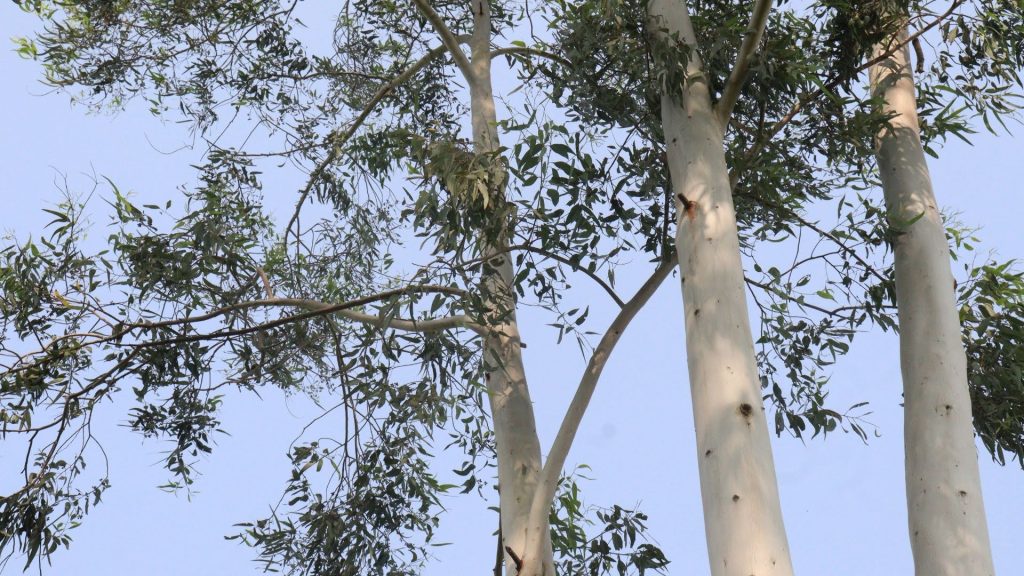
Eucalyptus felling is never just “pick a notch and go”. The right choice of cut supports control, speed, and safety, especially when tree removal must be completed cleanly and predictably on tight Sydney blocks.
What Makes Eucalyptus Trees Different to Fell?
Eucalyptus trees often demand a more conservative felling plan because they can fail suddenly and shed material without warning. The right approach to tree removal starts with understanding how the species behaves under load.
Many eucalyptus have a tall, sometimes leaning habit, heavy tops, brittle limbs and unpredictable weight distribution. Their oil-rich wood can burn readily, and shedding bark can interfere with saw work, footing and visibility.
Site conditions also shape the felling cut. Slope, wind exposure, nearby structures, fences, power lines, and access for rigging can all affect whether a single fell is realistic or whether staged dismantling is safer for tree removal.
Before any tree cutting services begin, a tree arborist should complete a pre-felling assessment. They typically check tree health, defects, hollows, deadwood, root plate stability and the likely fall zone.
They should also plan escape routes, exclusion zones and communication signals before starting a tree removal service.
- Tall crowns and heavy tops can shift weight mid-cut
- Brittle limbs and shedding bark increase falling-debris risk
- Wind, slope and nearby assets can rule out a straight fell
- Assessment should cover hollows, cracks and root plate movement
- Escape paths and exclusion zones are part of safe planning
When Is Tree Removal Safer Than Simple Pruning?
Pruning is maintenance, while tree removal is the complete removal from the top to the roots when the tree is dead, dangerous, or unsuitable for the site. The safer tree removal option is often the one that reduces the risk of ongoing failure, not the one that looks quickest today.
Tree removals are commonly justified for dead or dying trees, infections or borers, storm damage, uprooted or cracked trunks, severe lean, or a high risk of canopy failure. In these cases, delaying tree removal can raise the chance of property damage or injury.
Tree lopping vs pruning matters here. Lopping is a size-reduction, advanced maintenance approach, but poor lopping can trigger heavy regrowth and future failure. That can push the decision towards tree removal rather than repeated corrective work.
In Sydney, tree removal laws often require permits or approval from the local council for tree lopping services and, in some cases, for tree removal. They should confirm requirements before work starts to avoid disputes or penalties.
Professional services help protect tree health where possible, boost property value, save time and effort, and reduce the risk of legal action linked to unsafe trees or unapproved work.
- Pruning maintains structure; tree removal eliminates the hazard
- Dead, storm-damaged and heavily leaning trees often warrant removal
- Poor tree lopping can increase regrowth weight and later failures
- Permits may apply under Sydney tree prevention laws
- Correct decisions can protect value and reduce liability
What Types of Tree Felling Cuts Are Commonly Used?
Cut selection depends on lean, defects, the target direction, and the level of control needed for tree removal. Even common cuts can be dangerous if copied without an on-site risk assessment by a tree arborist.
Most methods rely on the same core parts. The face or notch sets direction, the back cut releases the stem, and the hinge wood provides steering. For eucalyptus, hinge control is critical because fibre can tear or behave unpredictably in compromised wood.
Wedges and pull lines add control. Wedges can counter back lean, reduce saw pinching and help hold the intended direction. Ropes, rigging, and pull lines are common when space is tight for local tree removal jobs or when added control over the fall is needed.
As a quick selection guide, they should consider the lean direction, signs of decay or hollows, drop zone size, and whether sectional dismantling is required rather than a single fell. A tree removal service may choose a standard open face notch for control, a Humboldt notch for certain landing needs, or a bore cut with a holding strap to reduce barber-chair risk in suspect stems.
- Face/notch, back cut and hinge wood are the foundations
- Wedges help overcome back lean and reduce bar pinch
- Pull lines and rigging improve control in confined spaces
- Decay and hollows may call for bore cutting and a holding strap
- If control is limited, sectional dismantling beats a single fell
Why Should Eucalyptus Tree Removal Be Handled Carefully?
Eucalyptus failures can be sudden, and improper technique increases barber-chairing, kickback and uncontrolled fall risk. That is why eucalyptus tree removal requires tighter planning and higher safety margins than for many other species.
A safer process starts with assessing trees for health and risk, then planning a safe tree-cutting and removal process. That usually includes a defined drop zone, clear escape path, a spotter, and weather checks before any cutting begins.
Compliance in Sydney matters too. Permits or approval from the local council may be required, and regulatory compliance reduces disputes and penalties for tree removals. For sites linked to construction, additional documentation may be relevant, especially when environmental responsibility is part of the scope.
Trees Down Under supports locals in the Hills District and North Shore with land-clearing and development services, including tree removal, stump grinding, vegetation clearing, mulching, site preparation, grading, environmental assessments, and regulatory compliance. In practice, that broader capability can matter when felling choices depend on access, machinery and disposal planning.
A reputable tree removal company should also prioritise insurance and risk management. Public liability, professional indemnity, workers’ compensation, and equipment and vehicle cover, backed by a risk management plan, reduce exposure when the unexpected occurs.
- Eucalyptus can barber-chair or shed limbs without warning
- Planning should include drop zones, escape routes and spotters
- Council approval may apply in Sydney, so they should check early
- Integrated services help when access, clearing and disposal interact
- Strong insurance and risk management reduce overall exposure
When Should You Call a Tree Removal Professional?
They should call a professional when dead, drying or infected trees, storm damage, cracks, root lift, heavy lean, or proximity to structures and services makes DIY unsafe. If permits are required, tree removal should not start until approval is granted.
A professional tree removal service typically provides hazard assessment by a tree arborist, a safe felling or cutting plan, sectional dismantling when needed, stump removal, green waste removal, and post-removal inspections. Those inclusions help ensure tree removal does not create a new hazard, such as an unstable stump hole, damaged fencing or unmanaged debris.
Hiring should be structured. They can research recommendations and reviews, verify credentials such as licences and insurance, prioritise local knowledge of Sydney conditions and council rules, and request itemised quotes that list services, equipment, tools, gear, PPE, and disposal.
Due diligence should also cover environmental practices, such as mulching and recycling green waste, as well as a site protection plan and traffic or pedestrian safety controls for local tree removal.
If the correct felling cut cannot be confidently chosen after an on-site assessment, they should engage a qualified tree removal company for tree-cutting services and book the removal with a documented plan. Arrange a site assessment and get a written, itemised quote before any cutting begins.


