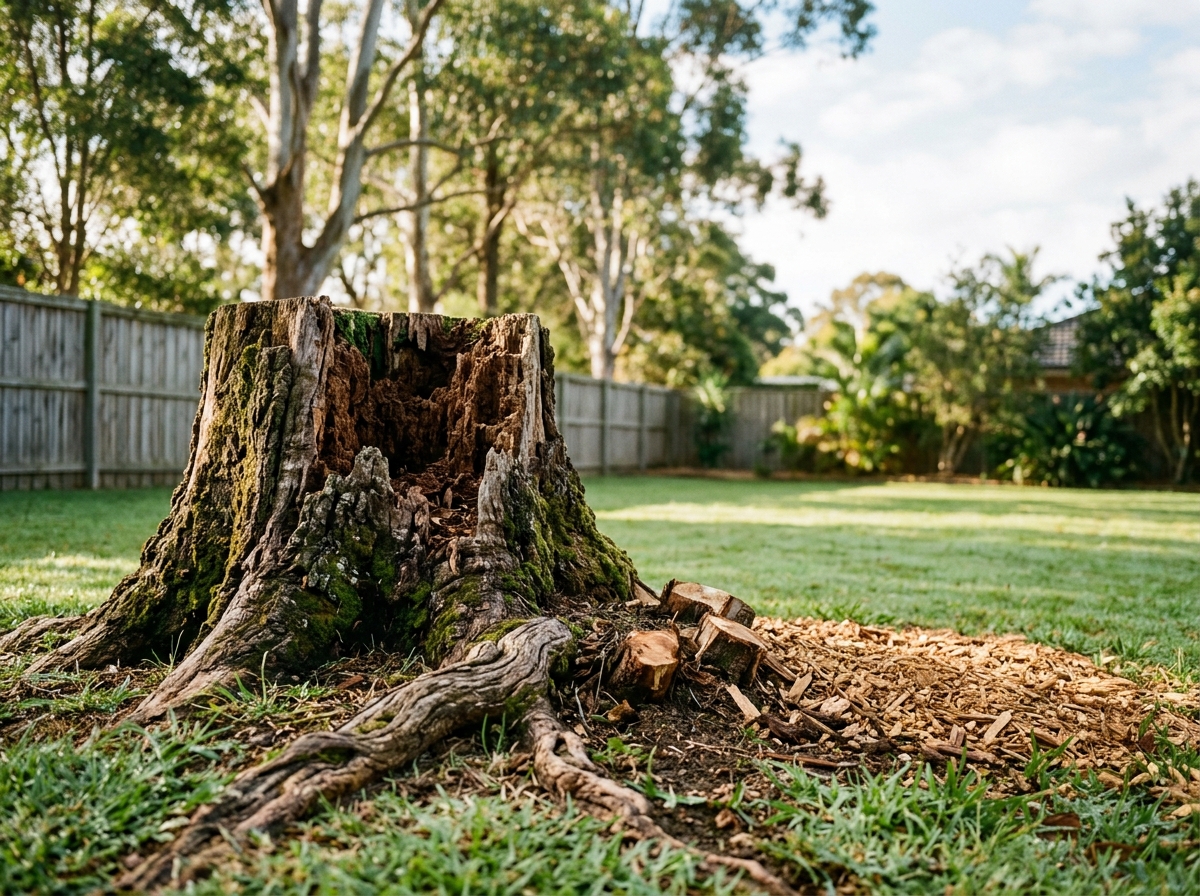
A rotten stump is a different job from a healthy one. The surface can look solid while the wood below is soft, hollow or riddled with decay. That hidden damage is why a stump left to rot rarely stays harmless.
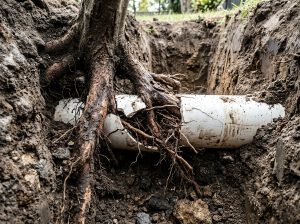
Decaying wood attracts termites, ants and fungi, and these can spread to nearby fences, timber garden beds and even the house frame. Roots that are breaking down can also leave voids under lawns and paving, so the ground sinks or shifts over time.
Old stumps are a trip hazard, especially once grass grows around them and hides the edges. Some also send up fresh shoots, so the problem keeps returning. And a stump in the middle of a yard takes up space you could use for a garden bed, play area or new paving.
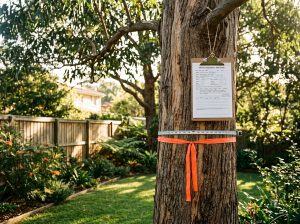
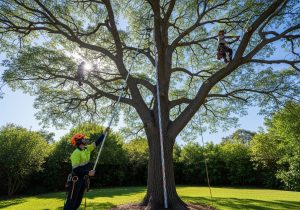
Soft, crumbling wood does not mean the job is easy. A stump that looks ready to fall apart can still have a live or sprawling root system beneath it. A certified arborist can tell what is dead, what is still active and what sits close to structures or services.