How deep the grind needs to go
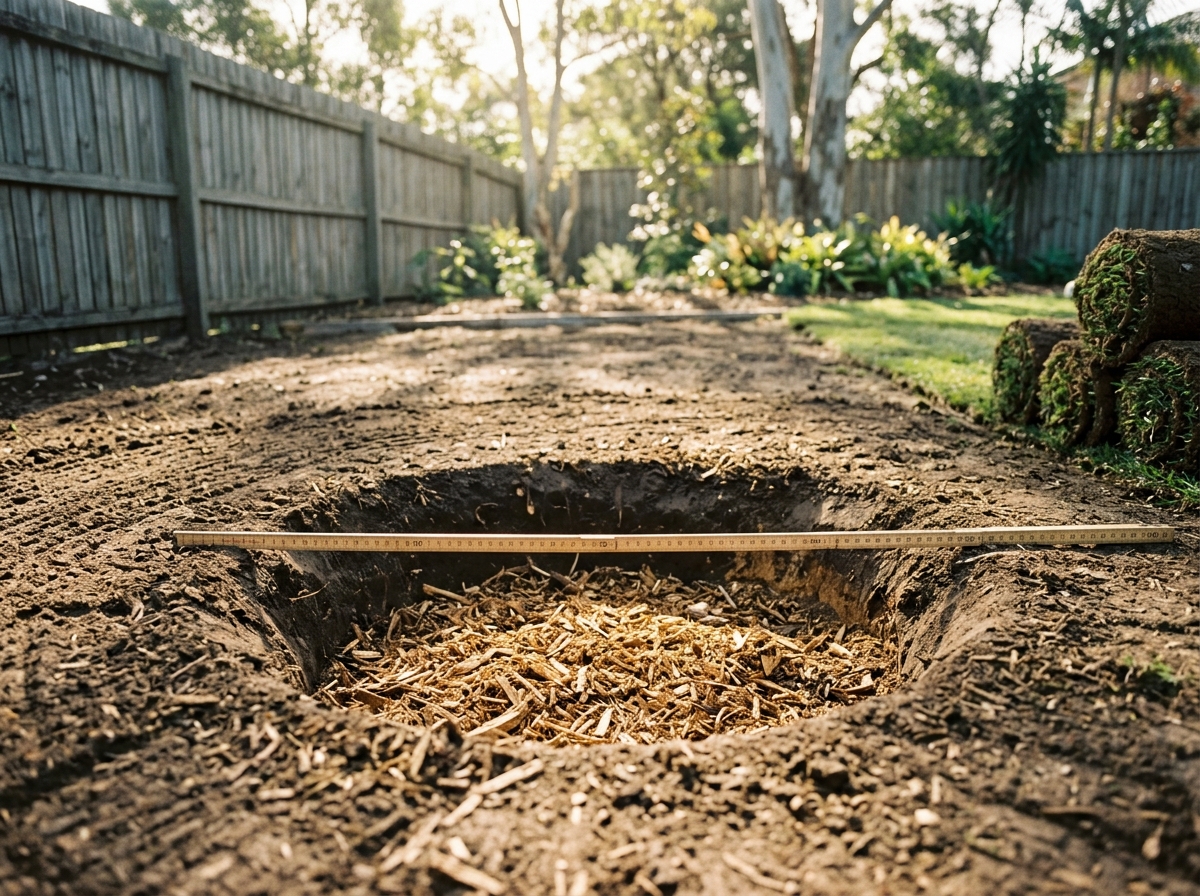
For a lawn-only area, the arborist grinds the stump well below ground level, clearing the woody mass from the root zone so there is soil above it for turf to root into. Deeper is not automatically better. The aim is a clear zone that can be backfilled and compacted, not maximum depth.
Depth is set by stump diameter, timber hardness, and any buttress or surface roots running out from the base.
Why shallow grinding causes problems
Wood left too close to the surface decays over time. That can mean sinking patches, fungus and sucker regrowth, and a hard layer that stops turf roots getting established.
Grind to the depth the finished surface needs, not the deepest the machine can reach. Over-digging only creates more ground to rebuild properly.
Joseph Khoury, Director & Founder, Trees Down Under
What changes by site
- Lawn only: grind below the turf root zone, then backfill.
- Garden beds: allow extra soil depth for plant roots.
- Paving or new structures: depth may be limited near pavers or slab edges to protect bedding and edging.
Our arborists assess the stump on site and plan the grind around your final surface. If the tree is still standing, tree removal comes first, and council permit requirements should be checked beforehand. Call 0475 463 597 any time to arrange a free inspection and same-day quote.